The BESS market is experiencing exponential growth, with lithium production anticipated to increase fivefold by 2030. This surge in demand is accompanied by rapid advancements in battery technology, leading to increasingly complex systems. However, the fast pace of innovation within the industry has outstripped the establishment of comprehensive safety and performance testing standards, including testing protocols, timing, and certification enforcement.
Despite significant efforts from standards organizations, the evolving nature of BESS technology has posed challenges in keeping standards current and fully aligned with innovation. As a result, customers often bear significant risks, especially in critical areas such as operational safety and system reliability.

At Cubenergy, we are committed to enhancing safety and performance through the application of existing standards while addressing gaps in their implementation. We adopt a collaborative approach that has led to the development of robust Factory Acceptance Test (FAT) and Site Acceptance Test (SAT) protocols. These protocols are designed to assess BESS systems from the cell, module, rack, and system levels. Our approach ensures rigorous testing and validation, helping to de-risk projects while supporting compliance with industry standards.
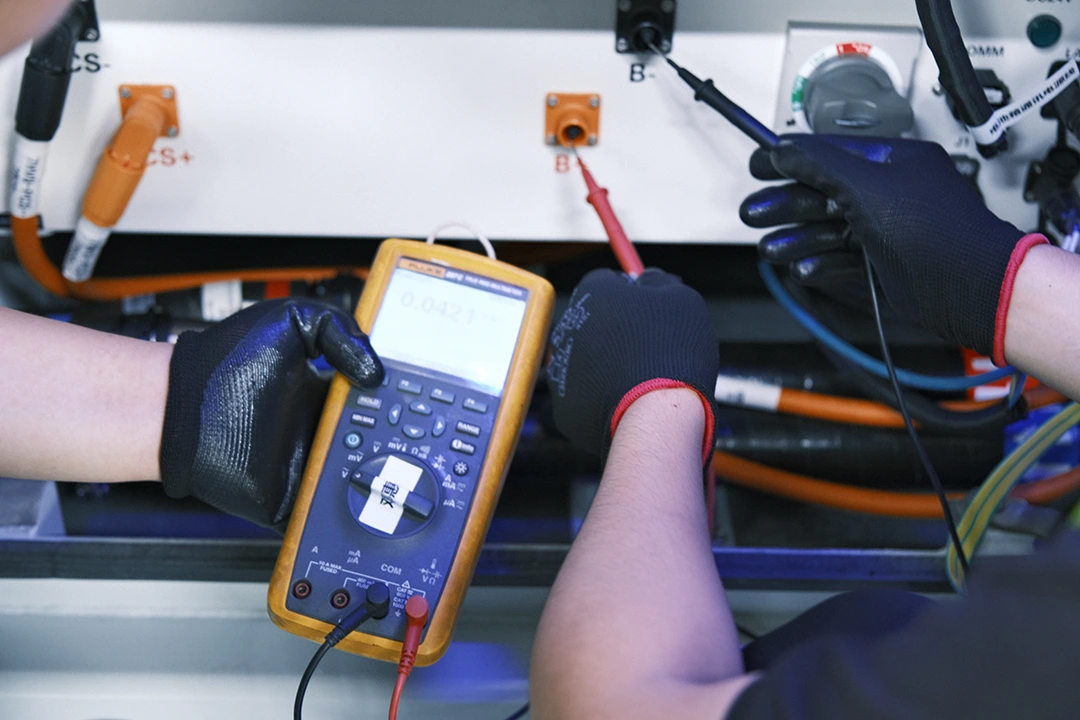
Factory Acceptance Testing (FAT): Validated the functionality, safety, and compliance of every component, and then evaluates the system as an integrated whole.
Site Acceptance Testing (SAT): Conducted on fully installed systems post-commissioning to the final product with a focus on the performance, safety, and compliance of the system in its final installed state.
Verification of Conformity
There are many battery safety-related standards, tests, codes and installation specifications. While under the current standard of international recognition, UL/NFPA/IEC/IFC are the core standard systems that can fully support our mainstream front-end market needs. These standard systems specify how a fully secure BESS is constructed from all dimensions.
Our acceptance test methodologies are grounded in internationally recognized standards, including IEC and UL certifications, to de-risk projects throughout procurement, construction, and operation. FATs and SATs, as detailed in standards such as IEC 62933-5-2 and UL 9540A, serve as a cornerstone of our quality assurance framework. These tests ensure compliance with safety and performance benchmarks, covering the entire lifecycle of BESS projects.
IEC 62933-5-2: Electrical energy storage (EES) systems-Part 5-2: Safety requirements for grid-integrated EES systems - Electrochemical-based systems.
UL9540A: Test method for evaluating thermal runaway fire propagation in BESS.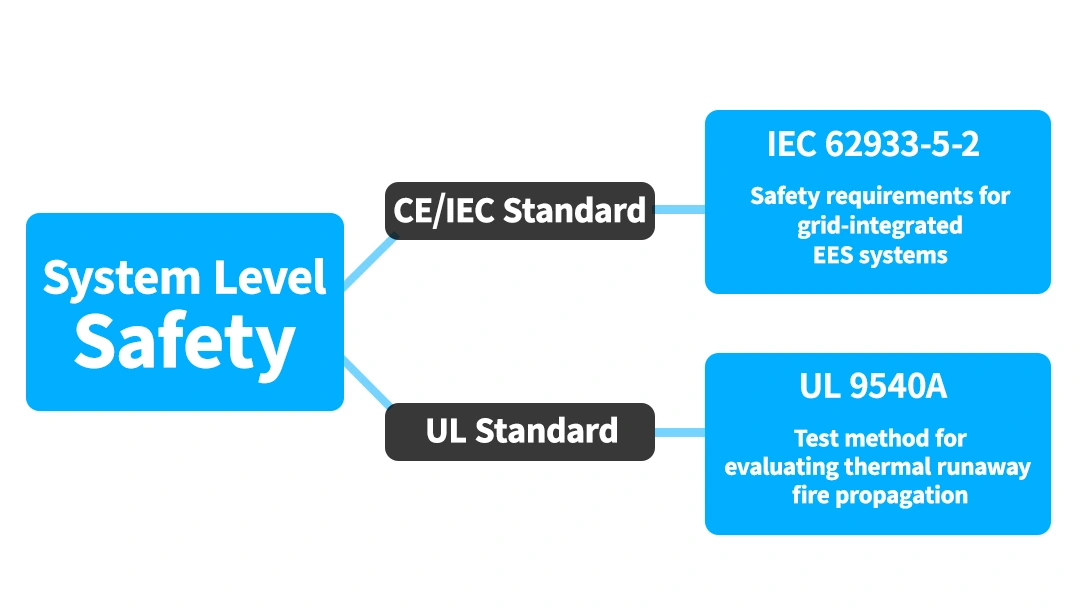
Our Testing Methodologies
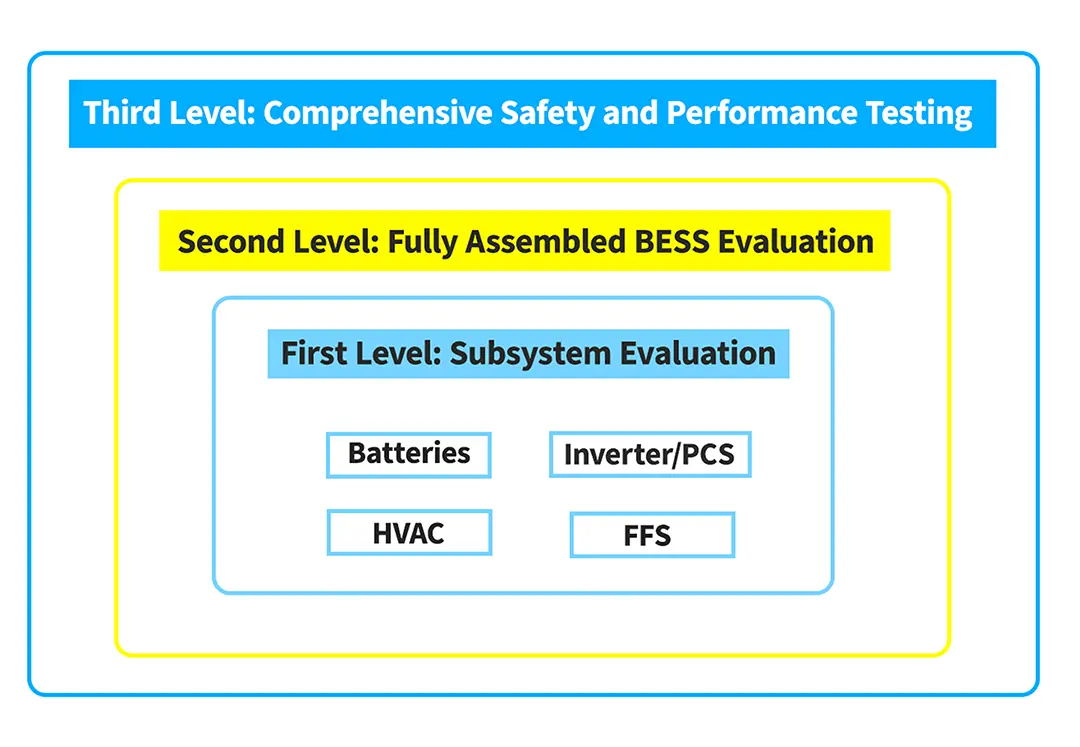
We consistently advocate for detailed FAT and SAT procedures, emphasizing the importance of detailed battery assessments. Our comprehensive FAT and SAT protocols are systematically designed with 3 levels:
First Level: Subsystem Evaluation
The initial level focuses on evaluating the BESS's primary subsystems, including the batteries and the power conversion system (PCS). In cases where the PCS is unavailable, the batteries are tested to meet the applicable standards.
Second Level: Fully Assembled BESS Evaluation
This level is conducted once the BESS is fully assembled. The safety evaluation expands to the entire system, requiring each subsystem to demonstrate individual safety compliance. This stage involves comprehensive tests on functional stability.
Third Level: Comprehensive Safety and Performance Testing
The third level of testing addresses the broader need for in-depth safety and performance evaluations, both through FAT and SAT. This level identifies key areas where additional testing is necessary to ensure system-wide safety and operational integrity.
Upon the completion of FAT and SAT, a comprehensive report is prepared, detailing all the tests conducted, the results achieved, and any discrepancies or issues identified during the process. This report undergoes thorough review and approval by the customer. By applying a structured, standards-based methodology, we help our customers navigate the complexities of BESS testing, ensuring comprehensive risk mitigation and reliable performance. Our approach provides clarity and ensures compliance, allowing customers to mitigate risks and gain assurance of reliable performance in a rapidly evolving industry.